
Home / All / Fully-Automatic Packaging Machine / Labelling Machine for Bottles Thermal Label Printer

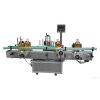
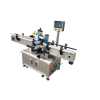
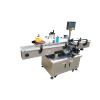
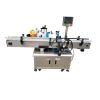
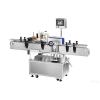
Labelling Machine for Bottles Thermal Label Printer
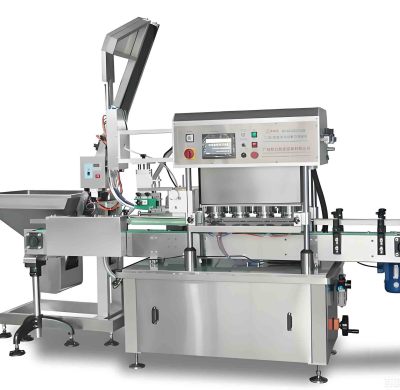
Labelling Machine for bottle Manufacturer can label different bottles, double labelling also,we also can provide different packaging solutions for different industries
| Share | |
|---|---|
| Categories | Fully-Automatic Packaging Machine |
| Brand | fame machinery packaging machines manufacturer |
| Model | FM016 |
| Packaging products | plastic bottle glass bottle |
| bottle specification | round |
| Machine power | 1.6Kw |
| Packaging speed | 10-60 pieces/min |
| FOB port | Guangzhou/Shenzhen |
| Terms of Payment | Western Union, MoneyGram, T/T, Paypal |
Detail Information
Introduction of Labelling Machine
Labeling machines, as automated equipment, are widely used in product packaging in industries such as food, beverage, pharmaceuticals, daily chemicals, and electronics. Their main features are as follows:
I. Core Features
High Automation
It can automatically complete label picking, feeding, affixing, and pressing actions, significantly reducing manual operation and improving production efficiency.
Integration with Production Lines
It can achieve full automation from product conveying and testing to labeling.
High Precision and Consistency
It employs precision control technologies such as servo motors and vision systems to ensure accurate label positioning (error controllable within ±0.5mm), avoiding problems such as skewed labeling and bubbling caused by manual labeling.
Suitable for products with strict labeling position requirements (such as electronic components and pharmaceutical bottle labels).
Flexibility and Adaptability
It can adapt to products of different shapes (bottles, boxes, tubes, bags) and materials (glass, plastic, metal) by changing the clamps and adjusting parameters.
Supports Multiple Label Types (self-adhesive labels, paste labels, shrink labels, etc.) and Labeling Methods (flat surface, curved surface, wrap labeling).
High Efficiency and Stability
Labeling speeds can reach tens to thousands of pieces per minute (e.g., round bottle labeling machines can reach over 300 bottles/minute), suitable for mass production.
Robust mechanical structure, low failure rate, capable of continuous long-term operation.
Intelligent Functions
Equipped with a touchscreen human-machine interface, allowing for quick parameter setting and formula storage.
Some models integrate a vision inspection system, automatically identifying product location or label defects for real-time quality monitoring.
II. Technical Types and Characteristics
Classification by Labeling Method
Flat Labeling Machine: Suitable for flat surfaces such as cartons and cards.
Round Bottle Labeling Machine: For cylindrical containers, capable of circumferential or partial labeling.
Side Labeling Machine: Used for labeling the sides or edges of products.
Corner Labeling Machine: Designed specifically for labeling adjacent sides of boxed products.
Classification by Label Type
Self-adhesive Labeling Machine: The most widely used, employing a peel-off plate for label dispensing, offering high precision.
Paste labeling machine (wet adhesive labeling): Traditional labeling method, low cost, suitable for glass bottles, etc.
Shrink film labeling machine: Uses heat shrinking to ensure labels adhere tightly to irregularly shaped containers.
III. Advantages and Value
Reduced Costs: Reduces reliance on manual labor, lowering long-term labor costs and material waste.
Improved Quality: Labels are flat and bubble-free, enhancing product appearance consistency.
Traceability: Can integrate inkjet printing or RFID technology to achieve simultaneous labeling and data association of production dates and batch numbers.
Environmentally Friendly and Energy-Saving: Some models support environmentally friendly label materials, reducing adhesive usage.
Selection Considerations of Labelling Machine
Product Characteristics: Consider size, shape, and label surface curvature.
Label Materials: Paper, film, and special materials have different requirements for labeling machines.
Production Capacity Requirements: Select a model based on production speed.
Expandability: Consider whether it's necessary to reserve interfaces for future function upgrades (such as vision inspection, data networking).
Related Products
Please send your message to us
- Phone
- *Title
- *Content