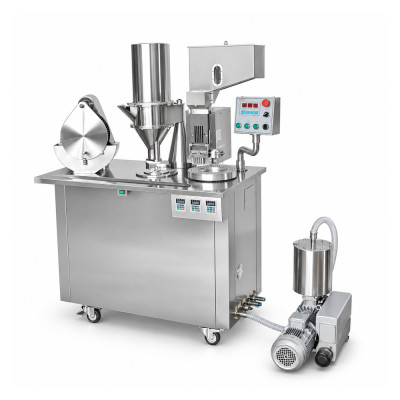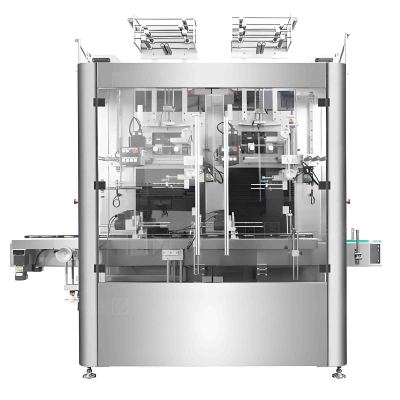
what are the features of the linear filling and sealing machines ?
The core feature of linear filling and sealing machines lies in their "linear arrangement" layout, which gives them significant advantages in space utilization, process adaptability, operation and maintenance, and hygiene standards.
For clarity, the table below summarizes these features across five dimensions: design layout, production performance, quality control, cleaning and maintenance, and cost suitability. All dimensions are based on specific products and technical specifications found in the search results.
| Features & Dimensions | Detailed Description and Advantages | Supporting Data/Case Studies |
| Design Layout | Compact structure and high space utilization: The workstations are arranged in a straight line, significantly reducing the space required for the sterile chamber and the equipment footprint compared to traditional rotary machines. The process flow is clear: containers (bottles, cans, cups) are conveyed in a straight line, sequentially passing through stations such as cup dropping, filling, capping/corking, sealing/screwing, and discharging. The logic is simple. | 1. The patented technology explicitly states that "the straight-line arrangement minimizes the width of the equipment workbench," meeting GMP aseptic operation requirements. 2. The straight-line design further reduces the sterile chamber space and decreases the consumption of sterilization media. Many equipment descriptions use a structure where functional modules are arranged "sequentially along the conveying direction." |
| Production Performance | High flexibility and quick changeover: Highly adaptable to container materials (PET, glass, HDPE, metal cans) and shapes (irregularly shaped bottles). Some models can switch specifications without changing parts. Wide production capacity coverage: Not limited to low speeds, high-end linear laminar flow machines can also achieve high-speed production through dual-row or multi-head designs. | 1. Patented "keyhole design" allows the same machine to accommodate two bottle neck diameters. 2. The can filling machine can quickly switch between 330ml and 500ml without changing parts. 3. The linear conveyor is easy to adjust, especially suitable for irregularly shaped bottles. 4. Single-row aseptic linear laminar flow machine capacity: 12,000-22,000 bottles/hour; dual-row capacity: up to 43,000 bottles/hour. 6. Low-speed models can reach as low as 1,000 bottles/hour, suitable for different scales. |
| Quality Control | High Filling Accuracy: Advanced metering methods such as flow meters and servo motor drives are widely used. Mistake-proof and material shortage protection: Equipped with intelligent detection functions for "no bottle, no filling; no bottle, no sealing/no capping". oxygen content control (for beverages): Integrates inert gas replacement in carbonated beverage and beer bottling. | 1. Electromagnetic flow meter control achieves a filling accuracy of ±2ml. 2. Servo motor drive ensures precise positioning, preventing material splashing and minimizing repeatability errors. 3. This is explicitly listed as a standard function, avoiding material waste and equipment contamination. 4. Isobaric filling combined with CO₂ replacement allows for oxygen increase control during the filling process to be ≤20 PPB. |
Cleaning and Maintenance | High Hygiene Standards: Parts in contact with materials are extensively constructed using food-grade SUS304/316L stainless steel, supporting CIP (Clean-in-Place) systems. User-friendly operation and maintenance: Modular design, microcomputer control, and human-machine interface (touchscreen) operation. | 1. Equipped with a CIP reverse circulation system featuring 360° rotating cleaning balls, effectively cleaning filling valves and piping. 2. The machine body can be rinsed with water; its design eliminates dead angles, facilitating the drainage of residual liquid. 3. Variable frequency speed control; filling parameters (volume, temperature, speed) can be set on the touchscreen. 4. Modular design, low energy consumption, and convenient maintenance. |
Cost-effective | Flexible initial investment: The structure is relatively simpler than rotary machines, and the cost of small to medium-sized equipment is lower, making it suitable for small-batch, multi-variety production. Operating Economy: Aseptic models reduce the consumption of sterilization media. | 1. The patent mentions cost savings by reducing the number of capping mechanisms.
2. Model range from hundreds to tens of thousands of bottles per hour, meeting different budget requirements. The compact aseptic chamber design directly reduces the amount of sterilizing agents such as hydrogen peroxide used. |
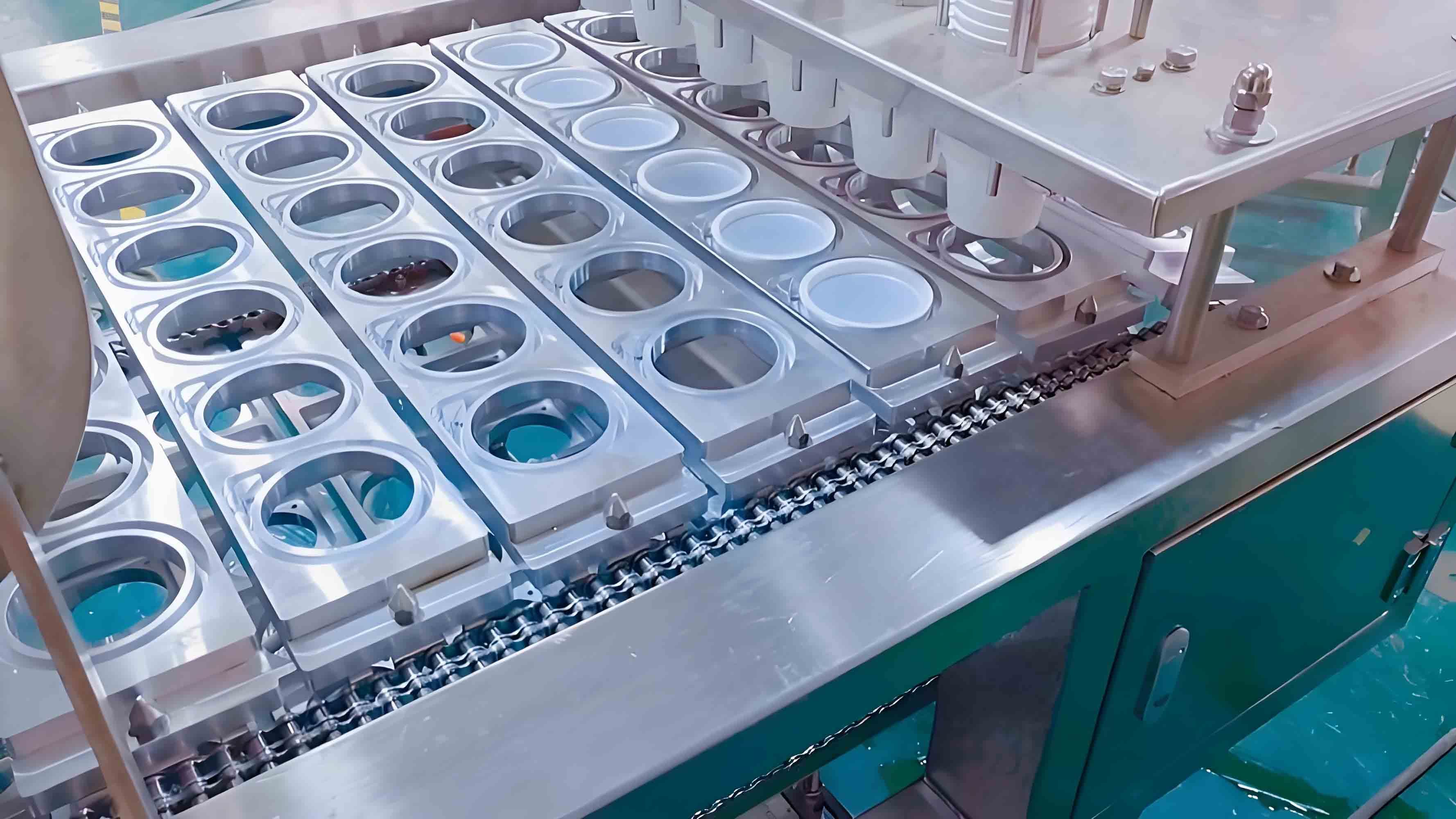
Linear filling and sealing machines are not synonymous with low productivity; they are essentially a solution that emphasizes both "space efficiency" and "process flexibility." Compared to traditional rotary machines, they offer unique advantages in handling a wide variety of containers of different sizes and shapes, as well as meeting stringent aseptic/hygienic production environments (such as pharmaceuticals and high-end foods).