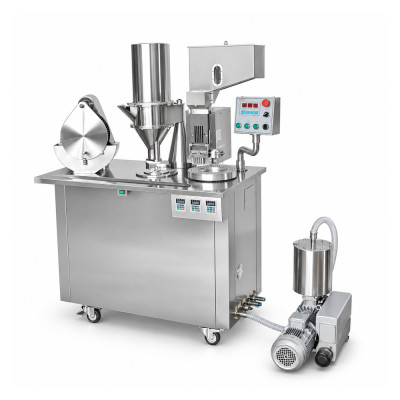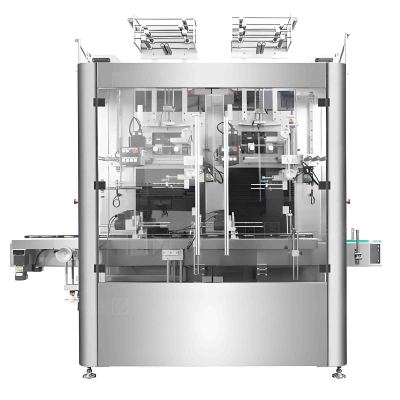
What is the relationship between the air compressor and packaging machines ?
This is a very typical industrial application combination. The combination of an air compressor and a packaging machine (usually referring to automatic packaging machines, such as pillow-type and vertical packaging machines for food and daily chemical products) works on the core principle that the air compressor provides stable, clean compressed air as a "power source" and "control source" to drive and control the various key moving parts of the packaging machine.
Below, we will analyze its working principle in detail from several aspects:
I. Core Logic: Why use compressed air?
Clean and safe: For industries with high hygiene requirements, such as food and pharmaceuticals, compressed air (after treatment) poses no pollution risk compared to hydraulic oil and direct motor drive.
Fast response: Air has good fluidity and extremely fast movement speed, suitable for the high-frequency, short-stroke precise movements of packaging machines.
Easy to control: By adjusting air pressure and flow rate, the force and speed of the actuators can be controlled very conveniently and precisely.
Simple and reliable structure: Pneumatic components (cylinders, solenoid valves) have a simple structure, are easy to maintain, and have low costs. They also automatically stop or slip in case of overload, providing protection.
Centralized and distributed power: A high-power air compressor can provide centralized air supply, simultaneously powering multiple packaging machines and other equipment in the workshop, allowing for flexible layout.
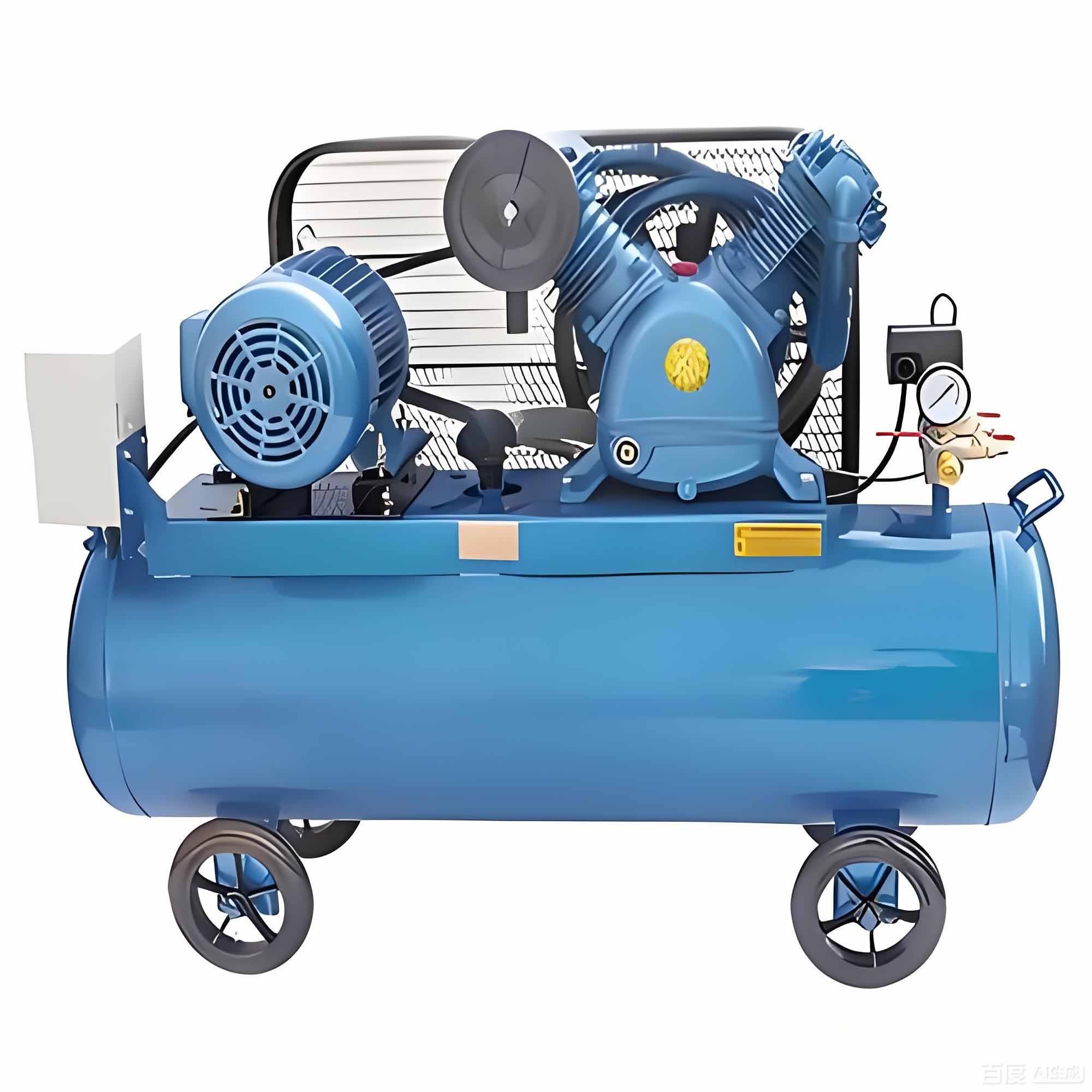
II. Specific Role and Principle of Air Compressors in Packaging Machines
The compressed air on packaging machines mainly serves two functions: driving execution and control assistance.
1. Driving Execution (Power Function)
This is the main function, converting the pressure energy of compressed air into mechanical energy through cylinders.
Principle: Compressed air, controlled by a solenoid valve, is introduced into the left or right chamber of the cylinder, pushing the piston rod to perform linear reciprocating motion.
Typical applications in packaging machines:
Horizontal and vertical sealing: This is the most critical action. The cylinder drives the heating block or sealing knife to quickly and forcefully clamp the packaging film for heat sealing or cutting. The pressure determines the sealing strength and appearance of the seal.
Material pushing/cutting: Pushing the product into the forming tube, or cutting long-chain products.
Bag opening and clamping: In vertical packaging machines, the cylinder drives the suction cup or gripper to open the packaging bag and hold and move it after filling. Coding and Labeling: The coding machine prints the date on the film, or the labeling head is activated.
2. Control and Auxiliary Functions (Control and Cleaning Functions)
Pneumatic Control System:
Principle: Compressed air drives pneumatic solenoid valves, which are controlled by electrical signals from the packaging machine's PLC (Programmable Logic Controller). The PLC sends instructions → the solenoid valve switches the air path → the cylinder moves. This is the core of the automatic cycle control of the entire packaging machine.
Auxiliary Components: The working pressure of each cylinder is precisely adjusted through a pressure reducing valve (e.g., adjustable sealing pressure), and the cylinder movement speed is adjusted through a throttle valve.
Cleaning and Blowing:
Principle: High-speed airflow is generated using compressed air.
Applications:
Film Path Cleaning: Before bag making and sealing, airflow is used to blow away dust or debris on the packaging film to ensure sealing quality.
Weighing and Feeding: In combination weighers or filling machines, a short burst of airflow is used to ensure that fine particles or powder materials fall completely into the packaging bag.
Finished Product Cleaning: After packaging is complete, residual material attached to the surface of the packaging bag is blown away.
Vacuum Adsorption:
Principle: Using a vacuum generator (a component that uses compressed air to generate vacuum) or an independent vacuum pump.
Applications: Smoothly sucking and transferring film, labels, or lightweight packaged products to avoid mechanical damage.
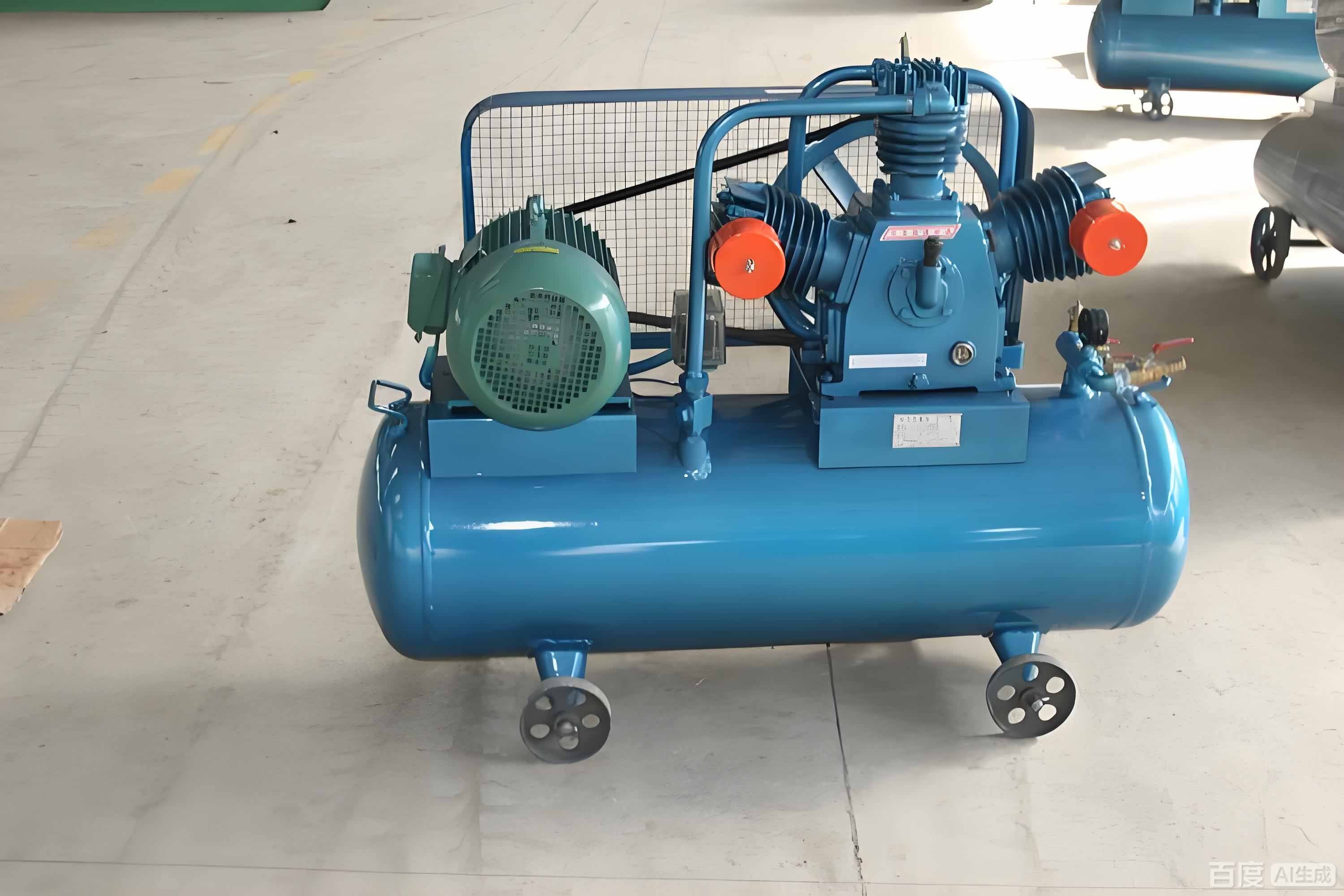
III. System Workflow (Taking a common pillow-type packaging machine as an example)
Power Preparation: The air compressor starts, compresses, cools, and filters the air (removing oil, water, and impurities), and then stores it in a storage tank to form a stable pressure air source.
Air Source Treatment: Compressed air is transported through pipes to the packaging machine, first passing through a "three-unit air source treatment system" (filter to remove water and impurities again, pressure reducing valve to adjust to the pressure required by the packaging machine, and oil mist lubricator to add a small amount of lubricating oil to the pneumatic components requiring lubrication).
Signals and Actions:
The packaging machine PLC sends electrical signals according to the set program (e.g., length, speed).
The electrical signals control the on/off sequence of the various pneumatic solenoid valves.
Compressed air is distributed to different cylinders: driving the longitudinal sealing roller, transverse sealing cutter, pushing rod, and other components for precise movement. Simultaneously, the solenoid valve for the cleaning nozzle opens, performing a blow-off cleaning.
The cycle repeats: at the end of each packaging cycle, the cylinders reset under the control of the solenoid valves, awaiting the signal for the next cycle, thus achieving high-speed operation.
Summary
In simple terms, an analogy can be made as follows:
The air compressor is like the "heart" and "lungs" of the packaging machine's power system, continuously generating and supplying "blood"—clean compressed air.
The air pipe network is the "blood vessels," responsible for transportation.
The solenoid valves are the "nerve switches," controlled by the brain (PLC).
The cylinders and other actuators are the "muscles," ultimately performing actions such as pushing, pulling, clamping, and cutting.
This combination of pneumatic and electrical systems enables high-speed, precise, clean, and reliable automated operation of the packaging machine, making it an indispensable technical solution for modern automated packaging production lines.