Potato Chips Packaging Machine: Improving Efficiency and Product Quality
Potato chips are one of the most widely consumed snack products, and their packaging requirements are more demanding than those of many other food products. Chips are lightweight and fragile, so the packaging process must provide accurate portion control while minimizing product breakage. A modern potato chips packaging machine helps snack manufacturers automate filling, bag forming, sealing, and product handling, creating a more efficient and consistent production process.
For B2B food manufacturers, selecting suitable potato chips packaging equipment is not only about increasing output. Machine configuration, weighing accuracy, film compatibility, sealing performance, and product protection all have a direct impact on operating costs and finished-product quality.
What Is a Potato Chips Packaging Machine?
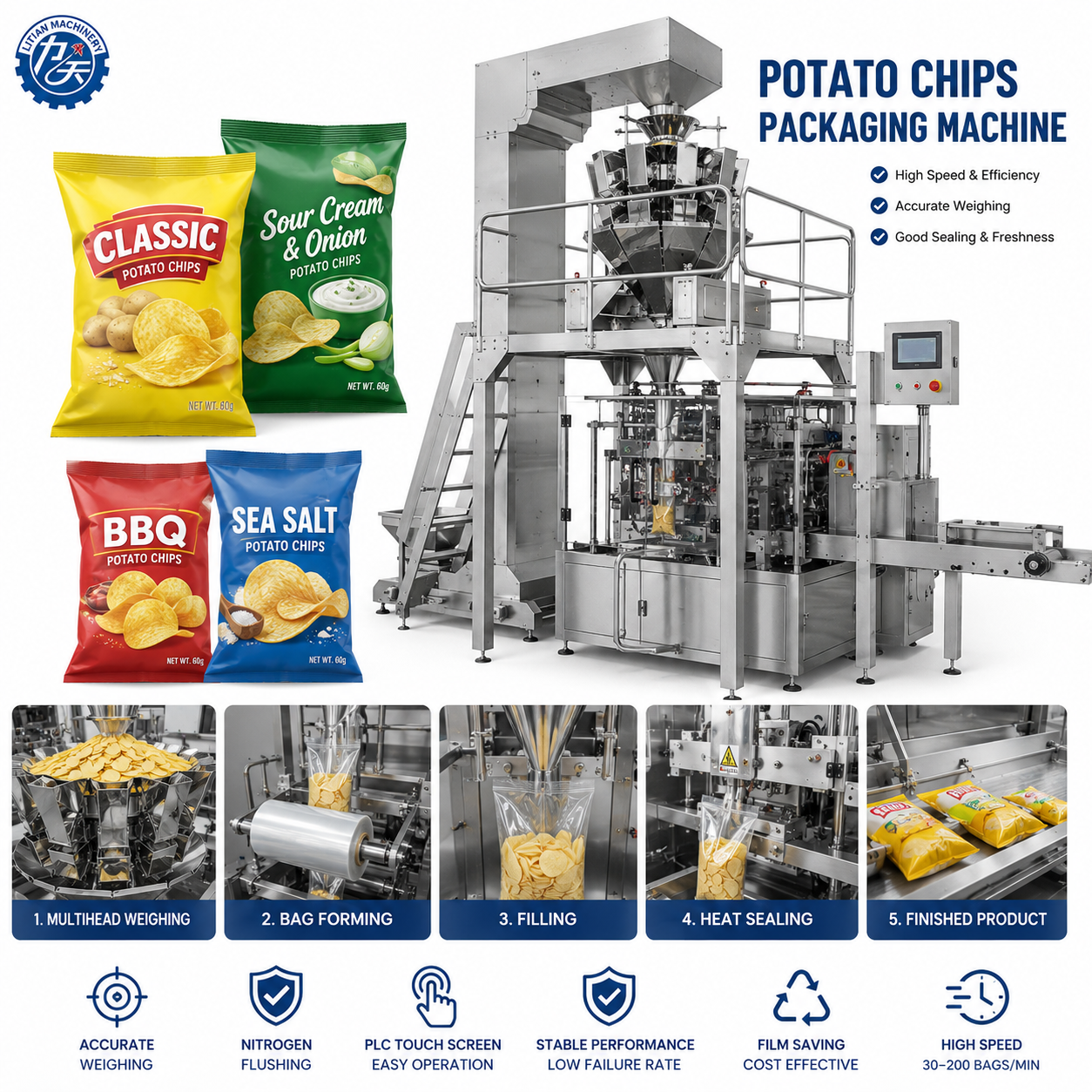
A potato chips packaging machine is industrial equipment designed to automatically portion and package potato chips into flexible bags or other suitable packaging formats. It is normally integrated with upstream equipment such as frying systems, seasoning machines, conveyors, and cooling systems to create a complete snack food production line.
Modern systems can handle different package sizes and film structures, allowing manufacturers to produce small snack packs, standard retail bags, and larger family-size packages. Depending on production requirements, the packaging line can also be equipped with multihead weighing systems, nitrogen flushing, date coding, metal detection, and automatic product discharge.
How Does Potato Chips Packaging Equipment Work?
The packaging process generally begins with chips being transferred from a conveyor into a weighing system. A multihead weigher measures the required quantity and releases the product into the packaging machine.
At the same time, a roll of flexible packaging film is guided through the forming unit. The machine shapes the film into a bag before the weighed chips are discharged into it. The filled bag then passes through the sealing section, where heat sealing creates a secure closure. Finally, the finished package is cut and transferred to the next production stage.
Typical Packaging Process
● Product conveying: Potato chips are transported to the weighing system.
● Accurate weighing: The weighing unit determines the target quantity.
● Bag forming: Roll film is shaped into the required package.
● Product filling: Measured chips enter the formed bag.
● Heat sealing: The package is securely sealed.
● Cutting and discharge: Individual bags are separated and sent to the output conveyor.
This automated process reduces manual handling and helps manufacturers maintain stable production speeds.
Main Types of Potato Chips Packaging Machines
Vertical Form Fill Seal Machines
Vertical form-fill-seal systems are widely used for potato chips and other lightweight snack products. They form bags directly from roll film and combine filling and sealing operations in one continuous process. This configuration is suitable for manufacturers looking for high output and flexible package sizes.
Premade Pouch Packaging Machines
Premade pouch systems use bags that have already been manufactured. The machine opens the pouch, fills it with potato chips, and seals it. This option can be suitable for businesses that require premium pouch designs, special shapes, or pre-printed packaging.
Multihead Weigher Packaging Lines
Multihead weighing systems are commonly paired with automatic snack packaging machines. Multiple weighing heads calculate different combinations of product quantities to reach the target weight quickly and accurately. This technology can reduce overfilling and improve material utilization.
Key Technologies for Snack Packaging
Multihead Weighing
Accurate weighing is essential when packaging potato chips because excessive product giveaway can significantly increase material costs over large production volumes. Multihead weighing technology provides fast and precise portion control.
Nitrogen Flushing
Potato chips are sensitive to oxygen and physical impact. Nitrogen flushing can replace part of the air inside the package, helping protect product quality and supporting a longer shelf life. The additional gas also helps create a cushioning effect that can reduce damage caused by external pressure during transportation.
Servo-Controlled Operation
Servo motors provide accurate control of film feeding, sealing, and cutting movements. This allows the machine to maintain stable package dimensions and improve synchronization between different production components.
Intelligent Control Systems
PLC-based controls and touchscreen interfaces allow operators to adjust filling weights, bag lengths, temperatures, and machine speeds. Recipe management can also make product changeovers more convenient for manufacturers handling multiple packaging specifications.
Benefits for B2B Snack Manufacturers
Higher Production Capacity
Automated potato chips packaging equipment can operate continuously, helping manufacturers achieve higher output compared with manual packaging processes. This is especially valuable for factories supplying supermarkets, distributors, food-service companies, and large retail chains.
Reduced Labor Requirements
Automating weighing, filling, sealing, and cutting can reduce repetitive manual operations. Employees can instead focus on quality inspection, material handling, machine supervision, and other production tasks.
Better Product Protection
A suitable packaging system minimizes unnecessary product movement and supports controlled filling. Combined with appropriate film and sealing technology, it helps protect fragile chips during storage and transportation.
Lower Material Waste
Accurate weighing and controlled film feeding can reduce both product giveaway and packaging material consumption. Over time, these improvements can have a meaningful impact on production costs.
Flexible Package Formats
Manufacturers may need to supply different markets with different package sizes. Adjustable machine settings allow businesses to switch between various bag dimensions and filling weights, improving production flexibility.
How to Choose the Right Potato Chips Packaging Machine
Before purchasing packaging equipment, manufacturers should evaluate several important production parameters.
Product characteristics: Consider chip size, shape, texture, seasoning level, and breakage sensitivity.
Target filling weight: Define the required weight range for each package size.
Production capacity: Determine the required bags per minute based on daily and monthly production targets.
Packaging material: Confirm whether the machine is compatible with the selected film structure, thickness, and width.
Package dimensions: Check the required bag width, length, and sealing style.
Available factory space: Consider the overall machine footprint and the layout of the existing production line.
Automation requirements: Determine whether additional equipment such as conveyors, metal detectors, checkweighers, or case packers should be integrated.
After-sales support: Evaluate spare parts availability, installation assistance, operator training, warranty terms, and technical service before making a purchasing decision.
Maintenance and Production Considerations
Regular maintenance is essential for maintaining stable packaging performance. Operators should clean product-contact areas frequently and remove seasoning particles or chip fragments that may accumulate around the weighing and sealing sections.
Film feeding components, sealing jaws, sensors, and conveyor systems should also be inspected regularly. Periodic checks of weighing accuracy help ensure that the actual package weight remains within the required specification.
Manufacturers should also establish preventive maintenance schedules based on machine operating hours. Replacing worn components before they cause unexpected failures can reduce unplanned downtime and improve overall equipment availability.
Future Development of Potato Chips Packaging
The snack packaging industry is moving toward greater automation, improved connectivity, and more sustainable packaging materials. Smart packaging machines are increasingly capable of collecting production data, monitoring machine conditions, and providing information for preventive maintenance.
At the same time, demand for recyclable and lightweight packaging films is encouraging equipment manufacturers to develop machines capable of processing new material structures without sacrificing sealing quality or production speed.
Automation, accurate weighing, intelligent monitoring, and flexible packaging formats will continue to influence the development of potato chips packaging equipment.
Conclusion
A modern potato chips packaging machine provides much more than automatic bag filling. It combines accurate weighing, efficient film handling, reliable sealing, product protection, and production automation to help snack manufacturers improve operational performance.
For B2B buyers, the ideal machine should be selected according to product characteristics, packaging specifications, production capacity, factory conditions, and future expansion plans. With the right configuration, automated potato chips packaging equipment can help manufacturers reduce labor costs, minimize waste, maintain consistent package quality, and build a more efficient snack food production line.