Automatic Vegetable Filling Packaging Machine for Efficient Food Processing
Overview of Automatic Vegetable Filling Packaging Equipment
An automatic vegetable filling packaging machine is designed for packaging moist, semi-solid, and irregular food materials such as chopped vegetable mixtures, dumpling fillings, prepared vegetable ingredients, and other fresh or processed food fillings. Unlike standard packaging equipment developed for free-flowing powders or uniform granules, this type of machine is engineered to handle materials with high moisture content and uneven particle sizes.
The equipment can complete the entire packaging process automatically, including film feeding, bag forming, product dosing, sealing, cutting, and finished package discharge. By using roll film instead of pre-made bags, food processors can improve packaging efficiency while maintaining consistent package dimensions and production standards.
Working Process and Machine Configuration
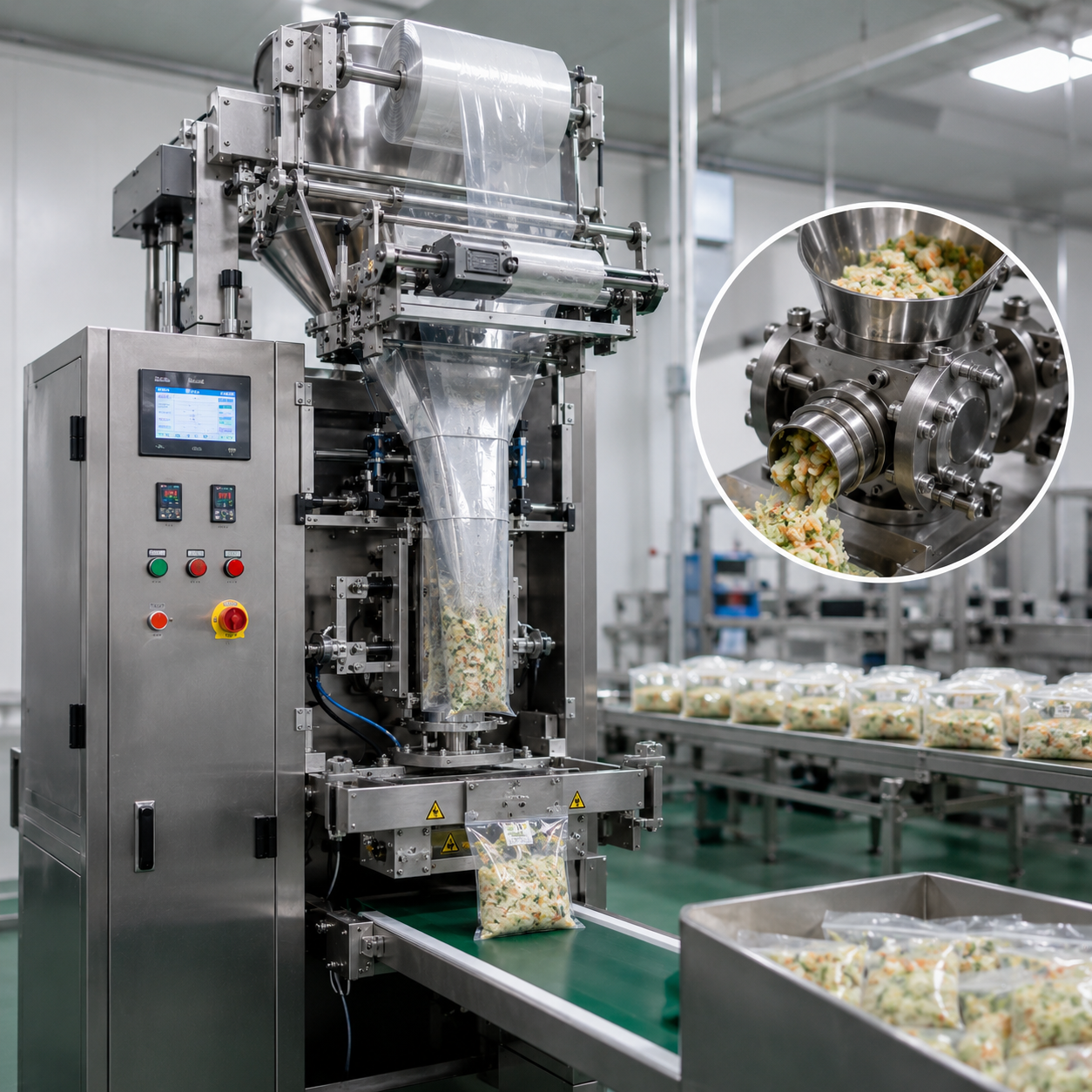
Most automatic vegetable filling packaging machines operate with an integrated form-fill-seal packaging system. The production process begins with product feeding and continues through package formation, filling, sealing, and discharge.
Main Components Include:
● Product feeding system
● Material hopper or buffer system
● Rotary lobe pump or suitable feeding mechanism
● Packaging film unwinding unit
● Bag forming system
● Filling and dosing unit
● Heat sealing mechanism
● PLC and touchscreen control system
● Finished product conveyor
For vegetable fillings containing chopped ingredients and moisture, the feeding system must move the material smoothly without excessive compression. A properly designed rotary lobe pump can help transport vegetable mixtures while maintaining product texture and reducing the risk of separation or inconsistent filling.
Food-contact components are typically manufactured from stainless steel to support hygienic production and simplify routine cleaning. The machine configuration can also be customized according to the characteristics of the vegetable filling and the required packaging format.
Key Benefits for Food Manufacturers
Higher Packaging Efficiency
Automatic operation reduces dependence on manual filling and bagging. The machine can perform multiple packaging steps continuously, helping manufacturers increase output and maintain a more stable production rhythm.
Accurate Portion Control
Through programmable settings, operators can adjust the target filling quantity according to product and package requirements. More consistent dosing helps reduce material waste and improves the uniformity of finished products.
Roll Film Packaging
Producing packages directly from roll film can reduce the need to purchase and store large quantities of pre-formed bags. This approach also provides greater flexibility when changing bag length and packaging specifications.
Reliable Package Sealing
Vegetable fillings often contain moisture that can create challenges during the sealing process. A properly adjusted heat sealing system helps create secure seals and reduces the possibility of leakage during storage, transportation, or distribution.
Intelligent Production Monitoring
Modern packaging equipment can include alarms and monitoring functions for issues such as insufficient material supply, film tracking errors, film breaks, or abnormal sealing temperatures. Early detection helps operators respond quickly and reduce unnecessary production losses.
Applications and Packaging Flexibility
Automatic vegetable filling packaging machines can be used for a variety of food products with similar physical characteristics.
Typical Applications Include:
● Mixed vegetable fillings
● Dumpling and bun fillings
● Chopped cabbage mixtures
● Carrot and vegetable blends
● Prepared vegetarian fillings
● Processed food ingredients
● Central kitchen food portions
● Frozen food fillings
The machine can be configured for different package sizes according to market requirements. Small consumer packs can be produced for retail sales, while larger bags may be suitable for restaurants, catering operations, and food processing facilities.
Depending on product properties, package size, and machine configuration, an automated system can achieve stable continuous production while helping businesses reduce manual labor and improve packaging consistency.
Hygiene and Food Safety Advantages
Reducing direct contact between operators and food products is an important advantage of automated filling and packaging. A closed or semi-closed production process can help improve hygiene management and reduce the risk of secondary contamination.
Stainless-steel product-contact parts, easy-to-clean machine structures, and properly designed feeding systems also support sanitation requirements in food processing environments. For manufacturers handling fresh vegetable ingredients, regular cleaning remains essential for preventing product residue from affecting food quality.
Maintenance and Daily Operation
Routine maintenance plays an important role in maintaining stable performance. After production, operators should thoroughly clean the feeding system, pump, hopper, pipelines, and areas around the filling and sealing stations.
Vegetable materials can leave moisture and residue inside the equipment, so cleaning should not be delayed between production batches. Operators should also inspect sealing components, film tracking systems, sensors, and mechanical connections regularly.
Recommended Maintenance Practices:
● Clean food-contact parts after each production shift.
● Remove vegetable residue from pumps and feeding pipes.
● Check sealing surfaces for contamination or wear.
● Inspect film feeding and tracking mechanisms.
● Verify filling accuracy regularly.
● Adjust operating parameters according to material texture and moisture.
● Replace worn parts according to the maintenance schedule.
Improving Production Efficiency with Automated Vegetable Packaging
As prepared foods, frozen foods, and centralized food processing continue to expand, manufacturers increasingly require packaging equipment that can handle complex ingredients efficiently. An automatic vegetable filling packaging machine provides a practical solution for businesses seeking higher production capacity, improved hygiene, and more consistent package quality.
By matching the feeding technology, filling system, packaging format, and production capacity to the actual product, food manufacturers can build a more efficient and standardized packaging process. For companies processing vegetable fillings and other moist food mixtures, customized automatic packaging equipment can support scalable production while reducing labor requirements and improving overall operational efficiency.