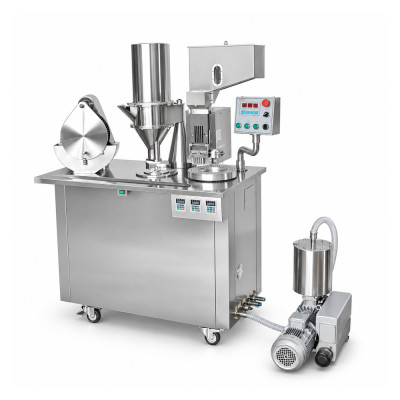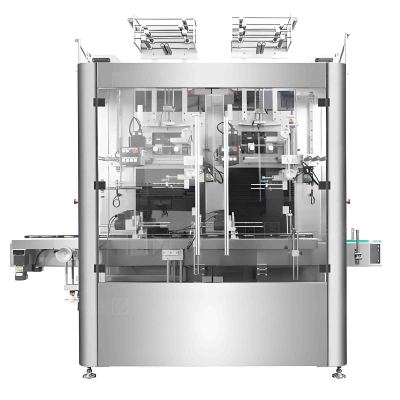
Advantages and disadvantages of rotary filling and sealing machines and linear filling and sealing machines
For yogurt filling and sealing, the core difference between rotary and linear filling systems lies in their efficiency: rotary systems prioritize high-speed production with a compact structure, making them the king of efficiency for small to medium batches; linear systems excel in flexible configuration changes, making them suitable for various specifications and large-scale production.
To help you make a more intuitive decision, I have summarized the core differences between the two as follows:
🎯 Key Positioning Overview
Rotary System (Wide-mouth Bottles/Disks): Works in a circular motion around a center point, with multiple stations operating simultaneously. Suitable for small to medium batches, stable production capacity, and cost-effectiveness.
Linear System (Straight Line Arrangement): Cups are arranged in a line and move forward in a rhythmic fashion. Suitable for large batches, frequent changes in specifications, and integration with production lines.
⚖️ Detailed Advantages and Disadvantages Comparison
| Comparison Dimensions | Rotary Filling and Sealing Machine | Linear Filling and Sealing Machine |
| Production Efficiency | High (continuous, uninterrupted operation).
Common speeds: Single head 800-900 cups/hour, dual head 1500-1800 cups/hour; some medium to large-scale lines can reach 9000-10000 cups/hour. | Extremely high or flexible (depending on the number of heads). Low-speed models approximately 2000 cups/hour, medium to high-speed (e.g., 6 heads) can reach 5000-6000 cups/hour, and high-end aseptic lines can exceed 28000 bottles/hour. |
| Changeover Flexibility | Poor. Changing cup types usually requires replacing the entire mold set (cup dropping mold, sealing mold), resulting in high customization costs and long processing times. Suitable for single or few product varieties. | Excellent. Adjusting the conveyor belt width and changing the filling head or sealing mold is sufficient. Suitable for multiple specifications and frequent order changes. |
| Footprint | Small (circular layout). Very compact, such as 1100×1100mm. Suitable for workshops with limited space. | Large (long and narrow). Longer machine body, requiring space for feeding and discharging (typically >3 meters). |
Investment Costs | Relatively Low. Mature structure, low unit price threshold, simple setup. | Relatively High. Especially for multi-head, servo-system-equipped, or sterile-grade high-speed lines, the initial investment is large. |
Maintenance Difficulty | Simple. Mechanical divider drive, compact structure, few vulnerable parts. | Slightly Complex. Electrical control is complex, with numerous maintenance points such as sensors and conveyor motors. |
Material Compatibility | General Purpose. Suitable for plain yogurt, juice, and oils. For materials containing large particles, a custom-designed stirring system to prevent settling is required. | More Flexible: Can be configured with piston pumps, screw pumps, and other methods. For materials containing particles, a dedicated valve can be selected; for large particles, a linear stirring system is recommended. |
Automated Integration | Can be used as a standalone unit or connected in a network. However, due to the rotation speed of the turntable, a buffer tower is required for high-speed connections. | Very easy to connect. The linear layout is inherently suitable for seamless integration with front-end filling and rear-end case packing machines. |
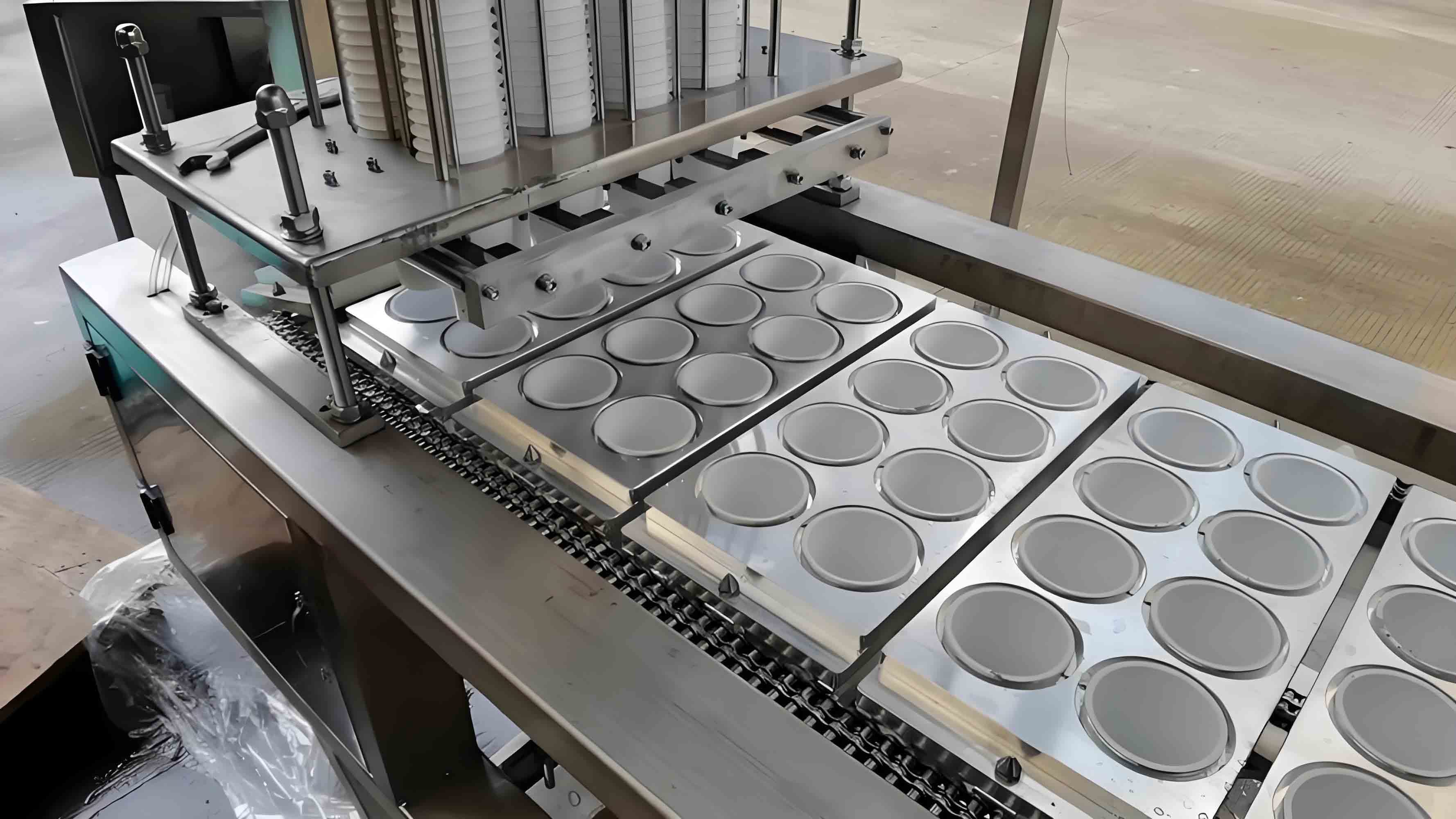
Selection Decision Recommendations: Follow These 3 Points and You're Likely to Choose Wrong
Consider Production Capacity Needs (First Priority):
< 2000 cups/hour: A rotary type is a no-brainer. It offers the best cost-performance ratio and fully covers all functions.
2000-4000 cups/hour: Either type is fine. If you only produce one type of yogurt (e.g., plain), a rotary type is sufficient; if you produce multiple flavors/sizes, a linear type is recommended.
> 5000 cups/hour: A linear type or multi-row cup machine is a must. Due to mechanical structure and mold size limitations, the stability of rotary types decreases at extremely high speeds.
Consider Product Structure:
If your yogurt contains noticeable large pieces of fruit or grains (e.g., coconut jelly, peach chunks), prioritize a linear type. Its filling valve piping is straighter, making rinsing easier, and the risk of clogging is far lower than the long, curved pipes of a rotary type.
Workshop Space and Planning:
The new factory has ample space and plans to upgrade the entire production line to automation (filling → sealing → labeling → packing), making the reservation of a linear layout a wise choice.
In the old factory renovation, with only a dozen square meters of available space, a rotary table system was the only fully automated solution that could be squeezed in.